


How to Strengthen Risk Control with Operational Risk Management

Shambhavi Singh
November 30, 2025
In an era of rapid digital transformation, expanding regulatory expectations, and increasing operational complexity, organizations face unprecedented risks. From cyber incidents and process breakdowns to regulatory compliance failures and third-party disruptions, every organization, regardless of size or industry, must strengthen risk controls to remain resilient. This is where Advanced Operational Risk Management (ORM) Software becomes the game changer.
Modern ORM platforms go beyond the traditional spreadsheets and siloed risk tracking. They provide integrated, automated, and intelligent capabilities that help companies in identifying, assessing, monitoring, and mitigating operational risks with far greater accuracy and precision.
Whether your organization operates in BFSI, manufacturing, IT/ITeS, healthcare, retail, or any regulated sector, implementing advanced ORM software can significantly improve your risk posture.
What Is Operational Risk Management Software?
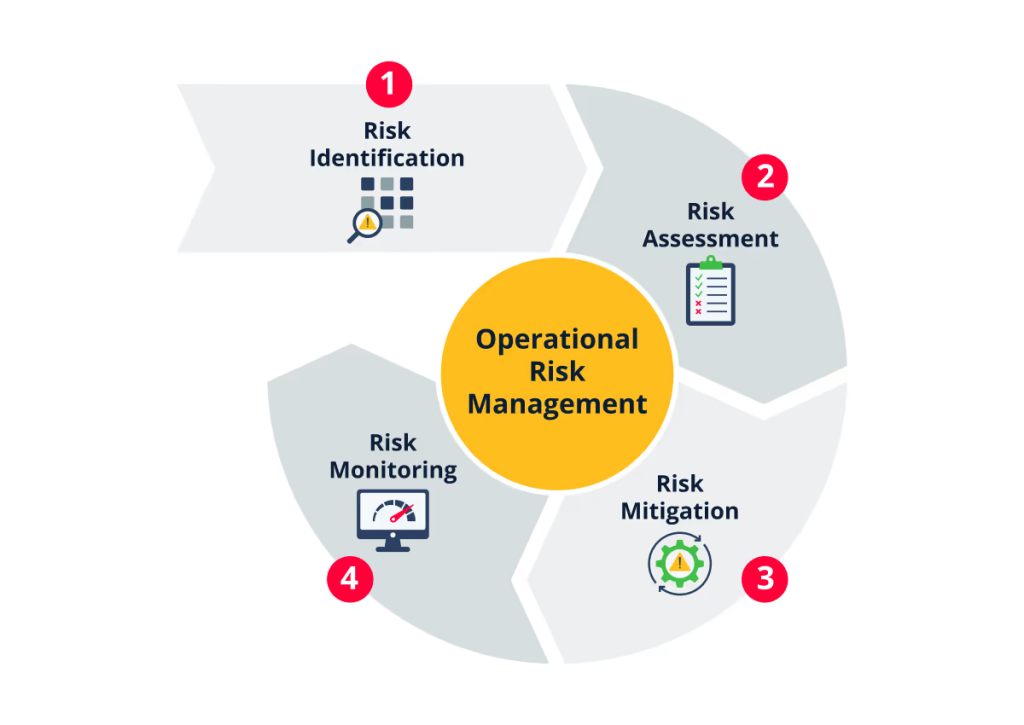
Operational Risk Management (ORM) software is a comprehensive and detailed technology platform designed to help organizations systematically identify, evaluate, monitor, and mitigate risks arising from internal processes, people, systems, and external events.
Traditional ORM approaches rely on manual tools like spreadsheets, static documents, and siloed communication. These methods are inefficient, error-prone, and incapable of supporting real-time decision-making.
Modern operational risk software transforms this landscape by offering:
- Centralized risk data
- Automated workflows
- Real-time monitoring
- Predictive insights
- Regulatory compliance mapping
- Audit-ready documentation
With these capabilities, organizations can shift from reactive mitigation to proactive risk control and continuous resilience.
Why Strong Risk Controls Are Essential
Operational risk remains one of the most significant sources of financial loss, regulatory action, and reputational damage. Weak risk controls can result in data breaches, service outages, compliance violations, fraud incidents, financial discrepancies, business continuity disruptions and customer dissatisfaction.
Regulators around the world, including RBI, SEBI, MAS, FCA, EBA, and others require organizations to demonstrate robust operational risk frameworks and effective internal controls.
In this environment, strong risk controls are no longer optional, they’re a business imperative.
How Advanced ORM Software Strengthens Risk Controls
Below are the key ways modern operational risk management software helps organizations strengthen their risk control environment from end to end.
1. Centralized Risk Identification and Assessment
One of the biggest challenges in risk management is scattered and inconsistent risk identification. Advanced ORM software solves this by centralizing:
- Risk libraries
- Control libraries
- Process maps
- Incident logs
- Compliance obligations
Benefits:
- Eliminates duplication of risk records
- Standardizes risk taxonomy
- Improves collaboration
- Provides a single source of truth
With comprehensive risk visibility, organizations can uncover hidden gaps and improve control design.
2. Real-Time Risk Monitoring and Alerts
Risk environments have become dynamic, especially with digital transformation and external disruptions. Advanced ORM platforms offer:
- Real-time dashboards
- Automated alerts
- Early warning indicators (KRIs)
- Live monitoring of controls
Benefits:
- Faster detection of threats
- Reduced chances of risk escalation
- Improved response times
- Prevention instead of containment
Real-time monitoring strengthens controls by ensuring issues are identified long before they become incidents.
3. Automated Workflows That Reduce Human Error
Manual risk and control processes often break down due to delay in reporting, miscommunication, inefficient hand-offs, missing documentation and non-compliant practices.
ORM software automates the entire lifecycle of risk and control processes:
- Risk assessments
- Control testing
- Issue remediation
- Policy acknowledgment
- Incident response workflows
- Compliance tracking
Benefits:
- Ensures timely action
- Reduces dependency on individuals
- Maintains complete audit trails
- Standardizes processes across departments
Automation alone can reduce operational risk-related failures by up to 60–70% in highly regulated industries.
4. Strengthening Controls With Control Testing & Assurance
A key part of operational risk management is verifying that risk controls work effectively. Advanced ORM software includes:
- Automated control testing schedules
- Control evidence collection
- Continuous assurance
- Root-cause analysis
- Control maturity scoring
Benefits:
- Higher assurance of risk posture
- Stronger compliance alignment
- Improved internal audits
- Faster identification of control gaps
Stronger controls mean less mystery and lesser risks.
5. Enhanced Incident Management and RCA (Root Cause Analysis)
Incidents can give important insight into control weaknesses. ORM software strengthens incident response by allowing:
- Instant incident logging
- Automated classification
- Real-time workflow routing
- Impact assessment
- RCA frameworks (5 Whys, Fishbone)
- Action plan tracking
Benefits:
- Faster resolution
- Reduced operational losses
- Learning from past failures
- Systematic improvement of controls
6. Integration With Third-Party Risk Management
Third-party risk has become a top concern in all industries. ORM software can integrate vendor risk data, enabling organizations to:
- Monitor vendor performance
- Track SLA deviations
- Map dependencies
- Score vendor risks
- Align controls with vendor obligations
Benefits:
- Reduces risks from external parties
- Ensures continuity in outsourced operations
- Strengthens governance across the ecosystem
Better third-party anticipation directly improves operational resilience.
7. Predictive Analytics to Strengthen Control Design
Advanced ORM platforms use AI and machine learning to predict potential risks, control failures, and operational hotspots. Predictive models analyze:
- Historical events
- Process performance
- Control success rates
- Any compliance deviations
- Employee behavior patterns
- External market triggers
Benefits:
- Proactive risk mitigation
- Early identification of weak controls
- Data-driven decision-making
- Resilience instead of reaction
Predictive ORM transforms risk management into a forward-looking discipline.
8. Enhanced Reporting and Regulatory Compliance
Regulatory expectations around operational risk have increased dramatically. ORM software automates compliance documentation for:
- RBI (India)
- ISO standards
- SOC reports
- GDPR / DPDP
- SOX
- Basel III
- Industry-specific mandates
The software generates:
- Audit-ready reports
- Compliance dashboards
- Risk appetite threshold reports
- KRI/KPI trends
Benefits:
- Simplifies audits
- Reduces non-compliance penalties
- Strengthens governance
- Aligns controls to regulatory expectations
Strong risk controls and compliance go hand in hand.
Key Features to Look for in Advanced ORM Software
When choosing operational risk software, ensure it includes:
- Centralized risk & control libraries
- AI-powered risk insights
- Real-time dashboards
- Automated workflows
- KRI/KPI monitoring
- Integrated incident management
- Audit trail tracking
- Control testing & assurance
- Policy & compliance management
- Third-party risk integration
- Custom reporting tools
- Data security & encryption
These features define the strength and effectiveness of your ORM program.
Best Practices to Strengthen Risk Controls Using ORM Software
Implementing ORM software is not enough. Organizations must adopt best practices to maximize impact:
1. Build a Risk-Aware Culture
Train employees
Assign ownership
Promote transparency
2. Standardize Risk & Control Taxonomy
Create uniform definitions
Ensure consistency across units
3. Integrate Risk Management Across Departments
Break silos between operations, IT, compliance, audit, and business units.
4. Use Data-Driven Insights
Leverage dashboards
Use predictive analytics
Focus on quantitative risk scores
5. Continuously Test and Validate Controls
Schedule automated testing
Track remediation progress
6. Align ORM With Regulatory Requirements
Map controls to standards and regulations.
7. Ensure Strong Governance Structure
Define roles, responsibilities, and escalation paths.
How Operational Risk Management Software Drives Business Value
Beyond strengthening risk controls, advanced ORM software delivers broader strategic benefits:
- Improved decision-making
- Faster issue detection
- Reduced financial and operational losses
- Lower compliance costs
- Enhanced customer trust
- Better resilience in disruptions
- Streamlined audits
- Stronger reputation in the market
When embedded correctly, ORM becomes a driver of operational resilience at its best, not just any compliance checklist.
Conclusion
As organizations navigate an increasingly complex operational landscape, strengthening risk controls is essential. Advanced operational risk management software empowers businesses to move away from reactive processes to proactive & predictive risk mitigation and continuous control improvement.
With real-time monitoring, automation, predictive analytics, and centralized governance, ORM software enhances transparency, improves control effectiveness, and protects organizations from operational failures.
Organizations that adopt modern ORM frameworks today will be far better equipped to face tomorrow’s risks with confidence, compliance, and resilience.
Written by

Shambhavi Singh is a Marketing Executive at Ascent Risk & Resilience, where she contributes to brand communication, content strategy, and digital storytelling across the organization’s risk and resilience solutions. With a background spanning content writing, voice-over artistry, anchoring, public speaking, and social impact, she brings both creativity and clarity to every message she crafts.
Shambhavi’s passion for communication started early in her hometown of Varanasi, where her curiosity for culture and heritage shaped her worldview. A natural storyteller and confident speaker, she has built a strong presence as a social media writer and continues to use her voice to inform, inspire, and engage audiences.
Driven by a blend of will and skill, she is committed to building meaningful connections, leading with empathy, and contributing to initiatives that create positive change. A social worker at heart and a marketer by profession, Shambhavi combines creativity, purpose, and leadership in everything she does.