



Top 7 Compliance Management Software Features Every Organization Needs

Shambhavi Singh
December 18, 2025
Compliance management has never been easy. But today, it is unarguably complex than ever before. Regulatory expectations are expanding, enforcement is intensifying, and organizations are being asked not only to comply, but to prove continuously that compliance is embedded into how they operate. What was once a back-office responsibility has evolved into a core pillar of trust, resilience, and business growth. Compliance Management Software thus, becomes really important.
Across industries such as banking, financial services, healthcare, SaaS, and critical infrastructure, compliance teams are expected to manage day-to-day adherence to internal policies, train employees, track regulatory changes, assess emerging risks, respond to audits, and anticipate the impact of new rules often with limited resources and rising scrutiny. Manual processes, spreadsheets, and email-driven workflows simply cannot keep pace with this reality.
This is why regulators increasingly expect organizations particularly financial institutions to maintain a structured Compliance Management System (CMS). A Compliance Management Software is not just documentation, rather it is the mechanism through which an organization understands its regulatory obligations, translates them into policies and controls, ensures employees follow them, and takes corrective action when gaps arise. While regulators offer flexibility in how a CMS is designed, they are consistent in what they expect: strong governance, effective implementation, and demonstrable oversight.
As regulatory complexity increases, organizations are turning to compliance software to operationalize these expectations. However, not all compliance platforms are created equal. Many tools promise automation, but few deliver the depth, adaptability, and intelligence required to support modern compliance programs. The difference between a system that merely stores documents and one that truly enables compliance lies in its features.
The following seven capabilities define what modern, effective compliance software must deliver if organizations are serious about moving beyond reactive compliance toward long-term resilience.
1. Continuous Compliance, Not Point-in-Time Readiness
One of the most fundamental shifts in compliance expectations is the move away from point-in-time assessments. Regulators and auditors increasingly expect organizations to demonstrate that controls are operating effectively on an ongoing basis, not just during audit season.
Modern compliance management software must support continuous evidence collection and control monitoring. This means compliance is no longer dependent on manual screenshots, ad hoc data pulls, or last-minute document chasing. Instead, evidence is automatically collected from systems such as cloud platforms, identity management tools, HR systems, and development pipelines. Changes are detected as they happen, allowing teams to identify control drift before it becomes a regulatory issue.
This capability fundamentally changes how compliance teams operate. Instead of preparing for audits reactively, they remain audit-ready at all times. Continuous monitoring also strengthens accountability, as gaps are identified early and addressed before they escalate into findings or enforcement actions. In a regulatory environment where expectations evolve rapidly, continuous compliance is no longer optional, it is foundational.
2. Adaptability to Organizational Risk, Size, and Complexity
Regulators have long emphasized that compliance programs must be risk-based and proportionate. A compliance system that works for a global bank will not suit a fast-growing fintech, and a one-size-fits-all solution rarely satisfies regulatory expectations.
Effective compliance management software must be configurable and adaptable. It should allow organizations to tailor workflows, controls, risk assessments, and reporting structures based on their specific regulatory exposure, product mix, geographic footprint, and maturity level. Systems that force organizations to adapt their processes to the software, rather than the other way around, often create friction, resistance, and workarounds that undermine compliance effectiveness.
Adaptability also means future readiness. As organizations expand into new markets, launch new products, adopt AI, or undergo mergers and acquisitions, their compliance obligations evolve. Software that cannot scale or adjust to these changes quickly becomes a constraint rather than an enabler. The strongest compliance platforms grow with the organization, supporting strategic change without sacrificing control or clarity.
3. Intelligent Regulatory Change Tracking and Impact Analysis
Keeping up with regulatory change is one of the most resource-intensive aspects of compliance management. New laws, amendments, guidance notes, and enforcement actions emerge constantly, often across multiple jurisdictions. Missing a regulatory update or misunderstanding its impact can have significant consequences.
Modern compliance management software must go beyond static regulatory libraries. It should actively track regulatory developments, including proposed rules, draft legislation, and supervisory guidance, and alert relevant stakeholders in a timely manner. Just as importantly, it must support structured impact assessments that help organizations understand how a regulatory change affects existing policies, controls, processes, and risk profiles.
This capability transforms regulatory change management from a reactive scramble into a proactive discipline. When compliance teams can anticipate regulatory shifts, they are better positioned to advise leadership, influence strategic decisions, and allocate resources effectively. Understanding not just what has changed, but what might change, gives organizations a critical advantage in navigating regulatory uncertainty.
4. Cross-Framework Mapping and Compliance Scalability
Most organizations today are subject to multiple compliance frameworks simultaneously. Financial institutions must align with sectoral regulations, data protection laws, cybersecurity standards, and internal governance requirements. Technology companies may need to demonstrate compliance with SOC 2, ISO standards, privacy regulations, and customer-driven security expectations all at once.
Without intelligent mapping, compliance teams end up duplicating effort across frameworks, recreating documentation, and repeating evidence collection for overlapping requirements. This inefficiency not only wastes time but also increases the risk of inconsistency and error.
Strong compliance management software enables cross-framework mapping, allowing a single control or piece of evidence to be linked to multiple regulatory requirements. This creates a unified compliance architecture where work performed once delivers value across many obligations. As organizations scale or adopt new frameworks, this capability becomes essential to maintaining control without overwhelming teams.
Scalability is not just about volume, it is about coherence. The ability to manage multiple frameworks through a single, integrated system is a defining feature of mature compliance operations.
5. End-to-End Visibility, Traceability, and Audit Readiness
Compliance is not a black box, and regulators do not accept “trust us” as an answer. Organizations are expected to demonstrate not only that controls exist, but that they are designed appropriately, implemented effectively, and monitored consistently.
Compliance software must provide detailed traceability across the entire compliance lifecycle. This includes clear records of who performed which actions, when decisions were made, what evidence supports them, and how issues were remediated. Strong logging and audit trails are essential not just for external audits, but also for internal oversight and governance.
Real-time dashboards and reporting capabilities play a crucial role here. Leadership teams need visibility into compliance posture, emerging risks, and areas requiring attention. Auditors need clear, structured access to evidence. Compliance teams need confidence that nothing is falling through the cracks. When visibility is built into the system, compliance becomes measurable, manageable, and defensible.
6. Workflow-Driven Collaboration Across the Organization
Compliance is never the responsibility of a single team. It spans legal, risk, IT, HR, security, operations, senior management, and the board. Without structured workflows, communication quickly breaks down, tasks are delayed, and accountability becomes unclear.
Effective compliance software must enable collaboration through role-based workflows, automated task assignments, reminders, approvals, and escalation mechanisms. Policy reviews, control testing, training attestations, and issue remediation should flow through the system in a structured, trackable manner.
This approach reduces reliance on emails, spreadsheets, and informal follow-ups. It also reinforces shared ownership of compliance, ensuring that responsibilities are clearly defined and progress is visible. When collaboration is embedded into the compliance process, organizations move from fragmented efforts to coordinated execution.
7. Trust, Transparency, and External Assurance
In today’s environment, compliance is closely tied to trust. Customers, partners, regulators, and investors increasingly expect organizations to demonstrate transparency around their security and compliance posture. Lengthy questionnaires, manual document sharing, and ad hoc responses are no longer sustainable.
Modern compliance software should support controlled external assurance through mechanisms such as trust portals or secure sharing environments. These allow organizations to present verified compliance information certifications, policies, audit reports in a structured and up-to-date manner, without exposing sensitive details.
This capability has a direct business impact. It accelerates sales cycles, reduces repetitive information requests, and strengthens stakeholder confidence. More importantly, it signals a mature compliance culture one that values openness, accountability, and consistency.
Compliance Software as a Strategic Enabler
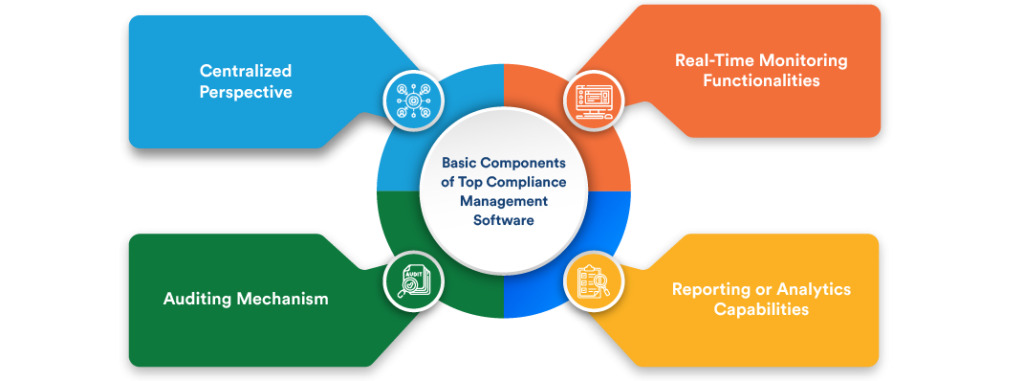
When implemented correctly, compliance software does far more than support audits. It becomes the backbone of a resilient compliance management system, aligning regulatory obligations with business operations, risk management, and governance.
The most effective platforms combine automation with intelligence. They reduce manual effort, but also provide insights that help organizations prioritize risks, anticipate regulatory change, and make informed decisions. As AI and advanced analytics become more integrated into compliance technology, organizations gain the ability to move from reactive defense to proactive governance.
The ultimate goal is not simply to stay compliant, but to embed compliance into how the organization operates, innovates, and grows.
Choosing Compliance Software That Actually Works
Not all compliance tools are created equal. Many promise automation, but few deliver the adaptability, visibility, and intelligence required in today’s regulatory environment. Choosing the right platform requires looking beyond surface-level features and asking deeper questions about how compliance is managed across the organization.
The right compliance software should support continuous compliance, adapt to organizational complexity, track regulatory change intelligently, scale across frameworks, provide full traceability, enable collaboration, and build trust with stakeholders. When these elements come together, compliance transforms from a burden into a strategic advantage.
In a world where regulation is constant and scrutiny is rising, organizations that invest in the right compliance capabilities are not just meeting requirements they are building confidence, resilience, and long-term credibility.
Compliance, when done right, is no longer about avoiding penalties. It is about earning trust and keeping it.
Written by

Shambhavi Singh is a Marketing Executive at Ascent Risk & Resilience, where she contributes to brand communication, content strategy, and digital storytelling across the organization’s risk and resilience solutions. With a background spanning content writing, voice-over artistry, anchoring, public speaking, and social impact, she brings both creativity and clarity to every message she crafts.
Shambhavi’s passion for communication started early in her hometown of Varanasi, where her curiosity for culture and heritage shaped her worldview. A natural storyteller and confident speaker, she has built a strong presence as a social media writer and continues to use her voice to inform, inspire, and engage audiences.
Driven by a blend of will and skill, she is committed to building meaningful connections, leading with empathy, and contributing to initiatives that create positive change. A social worker at heart and a marketer by profession, Shambhavi combines creativity, purpose, and leadership in everything she does.