


Risk Management in 2027: Why It’s Becoming the #1 Business Priority (and How to Prepare)

Shambhavi Singh
November 23, 2026
A few years ago, risk management was often the quiet team in the corner. It showed up before audits, filed its reports, and mostly stayed out of strategy meetings.
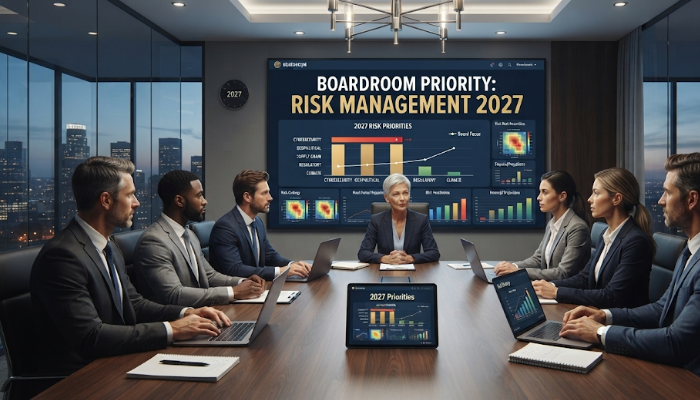
That is changing fast. As 2027 approaches, boardrooms are asking different questions. Not “Are we compliant?” but “Are we resilient?” Not “What went wrong?” but “What could go wrong next, and are we ready?”
In this guide, we look at why risk management is becoming the biggest business priority in 2027, which risks are driving the shift, what leading organizations are doing differently, and a practical checklist you can use to test your own readiness.
Why 2027 Is a Turning Point for Risk Management
Risk has always existed. What is different now is the speed, connectedness, and visibility of risk. Several forces are converging.
1. Risks now travel faster than ever
A cyber incident, a supplier failure, or a viral social media post can reach customers, regulators, and investors within hours. The time between “something happened” and “everyone knows” has nearly disappeared.
2. Risks are deeply interconnected
A geopolitical event disrupts a supply chain, which delays delivery, which triggers contract penalties, which strains cash flow, which affects credit ratings. Risks no longer stay in their lane. Organizations that manage risk in silos struggle to see these chains until it is too late.
3. Regulators expect proof, not promises
Supervisors across industries increasingly look for evidence that organizations understand and actively manage risk, including operational resilience, third-party exposure, climate impact, and responsible use of technology. Paper policies are no longer enough.
4. Boards and investors are paying closer attention
Stakeholders want to know how risks could affect long-term value. Risk reporting is moving from a compliance exercise to a core part of governance and investor confidence.
5. Technology is both the opportunity and the threat
Artificial intelligence, automation, and cloud platforms are transforming business. They also create new risks around data, bias, security, and accountability, often faster than traditional controls can adapt.
6. Uncertainty has become the norm
Economic shifts, policy changes, climate events, and global tensions mean the “stable baseline” many plans were built on no longer exists. Leaders need ways to make confident decisions amid uncertainty.
Put together, these forces move risk management from a support function to a strategic capability.
The Top Risks Shaping the 2027 Agenda
Here are the risk areas that many organizations are expected to prioritize.
AI and emerging technology risk
As businesses adopt AI faster, questions multiply. Who is accountable when an algorithm makes a poor decision? How is sensitive data protected? Is the model fair, explainable, and reliable? Responsible AI governance is quickly becoming a board-level topic.
Cybersecurity and data protection
Threats are more sophisticated, and attack surfaces keep growing with remote work, cloud adoption, and connected devices. The question has shifted from “Will we be targeted?” to “How quickly can we detect, respond, and recover?”
Third-party and supply chain risk
Organizations depend on vendors, partners, and service providers more than ever, and a failure at any of them becomes your failure. Third-party risk management now extends beyond one-time due diligence to continuous monitoring, including fourth parties.
Climate and ESG risk
Physical risks, such as floods and extreme heat, and transition risks, such as new regulations and shifting customer expectations, are becoming financial risks with real balance-sheet impact. Disclosure expectations are also rising.
Operational resilience
Can your critical services keep running through a disruption? Regulators and customers increasingly expect organizations to define important business services, set impact tolerances, and prove they can recover.
Regulatory and compliance complexity
Overlapping regulations across regions and sectors keep growing. Keeping up with change and mapping it to internal controls is a major workload for compliance teams.
Geopolitical and economic volatility
Trade tensions, sanctions, inflation, and currency swings can shift costs and demand overnight, making scenario planning more valuable than ever.
Talent, culture, and conduct risk
People remain both the strongest control and the greatest source of risk. Culture, ethics, and speak-up environments directly influence how risks are identified and escalated.
From Checklist to Strategy: How Leading Organizations Are Changing
The organizations pulling ahead are not just spending more on risk. They are approaching it differently.
They connect risk to strategy. Risk appetite is tied to business goals, so teams know how much risk is acceptable in pursuit of growth.
They move from periodic to continuous. Instead of annual assessments, they monitor key risks in near real time with clear thresholds and triggers.
They break down silos. Compliance, cyber, operations, vendor management, and audit share data and a common view of risk.
They use data and automation. Analytics, dashboards, and workflow tools replace spreadsheets, freeing experts to focus on insight rather than administration.
They test through scenarios. Stress tests and “what if” exercises prepare leadership before a crisis arrives.
They build a risk-aware culture. Everyone, not just the risk team, understands their role in spotting and reporting risk.
They learn from every event. Near misses and incidents feed back into controls and decisions, so the organization gets stronger over time.
Five Myths About Risk Management (That Are Holding Teams Back)
Myth 1: Risk management is about avoiding risk. Reality: It is about taking the right risks, knowingly. Organizations that understand risk can pursue opportunities others avoid.
Myth 2: Compliance equals safety. Reality: Passing an audit proves you met requirements. It does not prove you are resilient.
Myth 3: Risk is the risk team’s job. Reality: Business owners own risk. The risk function guides, challenges, and supports.
Myth 4: More reports mean better control. Reality: Insight matters more than volume. A short, decision-ready dashboard beats a 100-page report.
Myth 5: Technology alone will fix it. Reality: Tools amplify a good approach. Without clear ownership, data quality, and culture, even the best platform struggles.
A Quick 2027 Risk Readiness Check
Here is a fun and practical way to test where your organization stands. Answer yes or no to each question.
- Can leadership name the organization’s top five risks right now, without checking a report?
- Is risk appetite defined and linked to business strategy?
- Do you monitor key risks continuously, not just quarterly or annually?
- Do compliance, cyber, vendor, and operational risk teams share one view of risk?
- Have you mapped your critical business services and tested recovery from a disruption?
- Do you monitor your critical third parties beyond annual questionnaires?
- Do you have clear governance for how AI is used, reviewed, and approved?
- Are regulatory changes tracked and mapped to your policies and controls?
- Do business teams know what risks they own and how to escalate them?
- Are incidents and near misses analyzed and fed back into improvements?
How did you score?
- 8 to 10 yes: You are well-positioned. Focus on continuous improvement and use data to stay ahead.
- 5 to 7 yes: You have solid foundations but gaps remain. Prioritize integration and continuous monitoring.
- 0 to 4 yes: Risk is likely reactive today. Start with a clear view of your top risks, ownership, and a simple monitoring routine.
Seven Practical Steps to Prepare for 2027
1. Define your top risks and risk appetite. Align leadership on what matters most and how much risk is acceptable.
2. Unify your risk view. Bring risk, compliance, audit, and vendor data into a common framework with consistent language.
3. Prioritize by impact. Not all risks deserve equal attention. Focus effort where exposure is highest.
4. Move toward continuous monitoring. Identify key risk indicators and set thresholds that trigger action.
5. Strengthen third-party oversight. Know your critical vendors, monitor them regularly, and have exit and contingency plans.
6. Govern AI and new technology early. Set policies for approval, testing, accountability, and monitoring before adoption scales.
7. Invest in people and culture. Train teams, reward early escalation, and make risk a shared conversation.
What Will Risk Teams Look Like in 2027?
The risk professional of 2027 spends less time compiling data and more time advising the business. Automation handles collection, monitoring, and reporting. Analytics highlight patterns and early warnings. Risk leaders sit closer to strategy, helping decide where to invest, expand, or hold back.
In short, the role moves from rear-view mirror to windshield.
Frequently Asked Questions
Why is risk management a top priority in 2027?
Risk Management is a top priority in 2027 because risks are faster, more connected, and more visible than before, driven by technology, regulation, climate, geopolitics, and stakeholder expectations. Organizations need proactive, integrated approaches to stay resilient.
What are the biggest risks for businesses in 2027?
Common priorities include AI and technology risk, cybersecurity, third-party and supply chain risk, climate and ESG, operational resilience, regulatory complexity, and geopolitical volatility.
What is enterprise risk management (ERM)?
ERM is a structured, organization-wide approach to identifying, assessing, and managing risks in line with strategic objectives and risk appetite.
How is modern risk management different from traditional approaches?
Modern approaches are continuous, connected, data-driven, and forward-looking, whereas traditional ones are often periodic, siloed, and backward-looking.
How can small and mid-sized organizations get started?
Begin with a simple risk register, clear ownership, and regular review of the top risks. Add technology and automation as complexity grows.
Can technology really help with risk management?
Yes. Automation and analytics reduce manual effort, improve visibility, and help teams detect issues earlier, as long as they are supported by strong governance and good data.
Final Thoughts
Risk management is no longer a background function. In 2027, it is a competitive advantage. Organizations that understand their risks, connect their data, and act early will make better decisions, recover faster, and earn more trust from customers, regulators, and investors.
The real question for leaders is not whether risk management will become a priority. It is whether you will lead that shift or be forced into it.
The best time to start is before the next surprise arrives.
Written by

Shambhavi Singh is a Marketing Executive at Ascent Risk & Resilience, where she contributes to brand communication, content strategy, and digital storytelling across the organization’s risk and resilience solutions. With a background spanning content writing, voice-over artistry, anchoring, public speaking, and social impact, she brings both creativity and clarity to every message she crafts.
Shambhavi’s passion for communication started early in her hometown of Varanasi, where her curiosity for culture and heritage shaped her worldview. A natural storyteller and confident speaker, she has built a strong presence as a social media writer and continues to use her voice to inform, inspire, and engage audiences.
Driven by a blend of will and skill, she is committed to building meaningful connections, leading with empathy, and contributing to initiatives that create positive change. A social worker at heart and a marketer by profession, Shambhavi combines creativity, purpose, and leadership in everything she does.